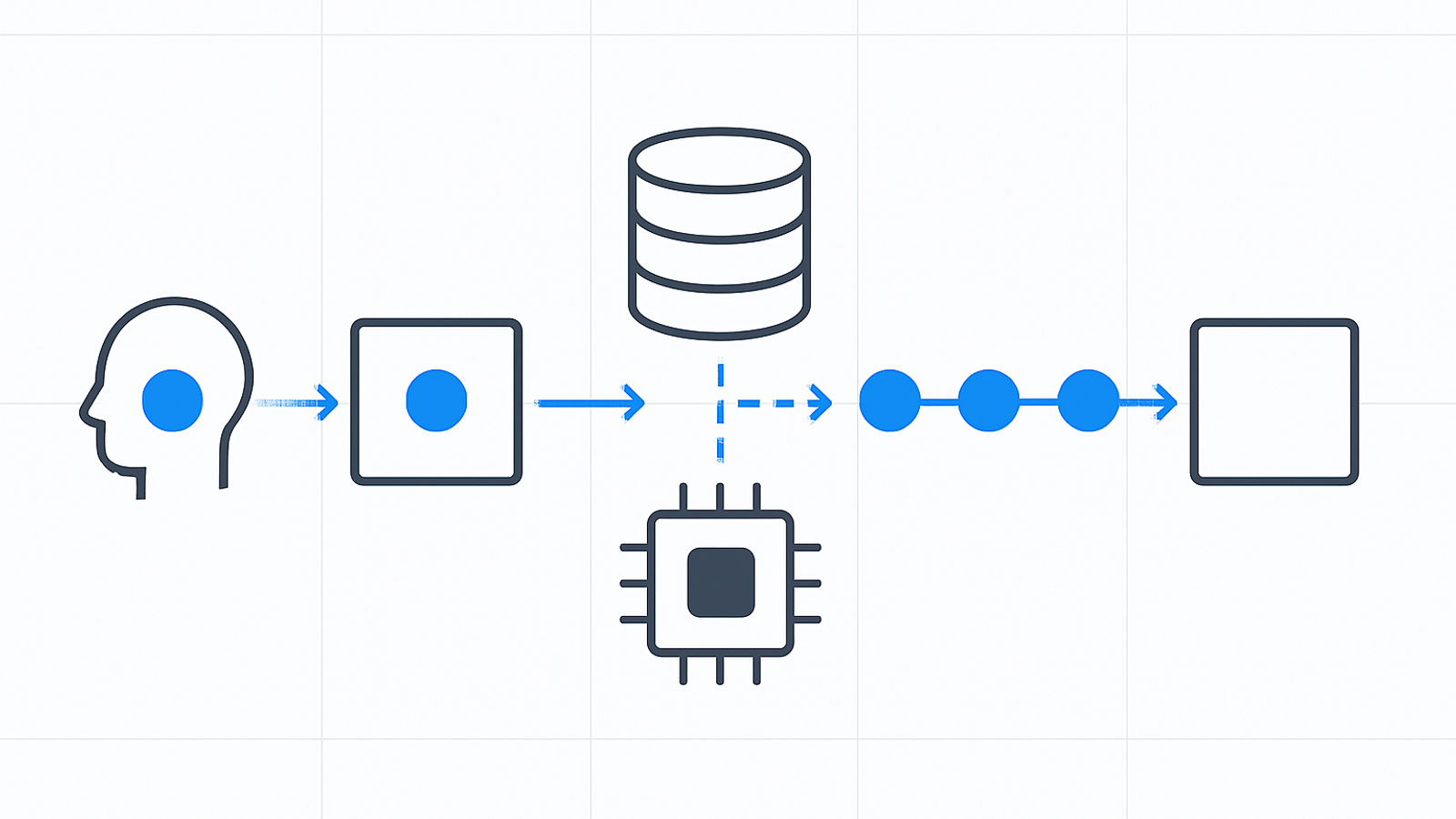
If your AI assistant is still saying “I can’t find that policy” while the PDF sits in SharePoint or Google Drive, the problem usually isn’t the model—it’s how the content is chopped up and tagged before search. The two levers you control are chunking (how you break documents into retrievable passages) and metadata (the labels that tell search and AI what each passage is). Together they decide what’s actually retrieved, what gets ignored, and what your people trust.
There’s also a quirk of long‑context models: answers are often best when the relevant passage is at the start or end of the prompt, and can degrade when key facts sit in the middle—one reason careless chunking or over‑long context windows quietly lower accuracy. This “lost in the middle” effect is documented in peer‑reviewed research, with follow‑on work showing ways to mitigate positional bias. arxiv.org
The 10‑day chunking and metadata plan
Day 1: lock your scope (30 golden questions)
- Pick one team or service line (for example, HR policies, helpline scripts, or grant criteria).
- Write 30 realistic questions people actually ask. Include a mix of quick facts, “how do I” steps, and judgement calls.
- For each question, note the single most authoritative source and the section/page where the answer lives.
Day 2: audit the source content
- List where the content lives today (SharePoint library, Google Drive folder, Confluence, website, PDF store).
- Note the formats (DOCX, PDF, PPTX, HTML), the typical length, and whether headings are accurate.
- Identify duplicates and near‑duplicates—decide which is the “gold” version.
Day 3: choose a sensible baseline chunk size and overlap
Start simple. A widely used baseline is about 512 tokens with ~20–25% overlap, then adjust based on your documents and evaluation results. Microsoft’s Azure AI Search guidance recommends this ballpark and explicitly suggests experimenting with chunk size and overlap. learn.microsoft.com
Day 4: design a minimal metadata schema (no new system required)
Create a small set of fields you can populate automatically during indexing. Aim for:
- source_path (URL or drive path)
- title and section_headings
- content_type (policy, SOP, form, minutes, FAQ)
- last_modified and version
- owner and audience (internal, partners, public)
- permissions_label (for example, “internal” vs “public”)
These fields help your search engine combine keyword and vector results, filter by audience, and show clear citations. They also support everyday information management good practice on GOV.UK (naming, ownership, and only keeping what you need). gov.uk
Day 5: pick the right chunking pattern per document type
- Policies/SOPs (DOCX/HTML): split by headings and paragraphs so each chunk is a single rule or step. Add section and policy IDs as metadata. Content‑aware chunking like this preserves meaning better than naive fixed windows for structured documents. docs.cohere.com
- Scanned or formatted PDFs: start with page‑level chunks, then optionally combine short pages. Many teams see strong results with page‑level chunking in tests. developer.nvidia.com
- Meeting notes/transcripts: chunk by speaker turn or agenda item; overlap lightly so names and actions stay intact. docs.cohere.com
- FAQs: one Q–A per chunk; no overlap.
Day 6: wire this into your search index
If you use Azure AI Search, “integrated vectorisation” will chunk and embed during indexing and can combine vector and keyword fields for hybrid search, keeping your pipeline simple. Equivalent features exist in other platforms; the principle is the same. learn.microsoft.com
Day 7: evaluate with your 30 questions
- For each question, check: did the right chunk appear in the top‑k results; did the answer cite the correct source and section; was the text current?
- Track three numbers: Answer correctness (exact/partial/miss), Citation coverage (did it show a link and section), and Time‑to‑first‑useful‑answer.
- If you need a structured way to test, adapt the checks in our recent quality guide and hybrid retrieval playbook. The 9 AI content quality tests and Hybrid retrieval, freshness and evaluation playbook.
Day 8: tune recall, precision and cost
- Hybrid beats either/or: combine vector similarity with keyword/semantic ranking; Microsoft’s benchmark guidance finds this consistently improves relevance. learn.microsoft.com
- Find your “middle” chunk size: tests from industry labs show very small (for example 128 tokens) and very large (for example 2,048 tokens) chunks often underperform; the sweet spot varies by query type—fact questions like smaller chunks; analytical questions benefit from larger or page‑level chunks. developer.nvidia.com
- Reduce index size: use vector quantisation where supported to compress embeddings (for example, 4× with int8; up to ~28× with binary), then validate any impact on relevance. learn.microsoft.com
Day 9: build a small change policy
- Nominate content owners; when a policy changes, they update the source, not the AI tool.
- Set a “freshness SLO” per collection (for example, HR policies re‑indexed nightly; forms weekly).
- Add a simple banner in answers that shows the source, section and last‑updated date.
Day 10: rollout and train
- Show users how to click the citation to the exact section or page. Encourage feedback buttons (“Helpful?” “Out of date?”).
- Publish a one‑pager on “What’s in scope” so colleagues know which sources are included.
Choosing the right chunking mode: a quick decision tree
- Do your documents have clear headings or numbered steps? Use heading/paragraph chunks with minimal overlap.
- Are they layout‑heavy PDFs (tables, forms, posters)? Start page‑level; test modest page merges for short pages. developer.nvidia.com
- Are they transcripts or minutes? Split by speaker turn or agenda item with small overlap so names/actions stay together. docs.cohere.com
- Mixed bag and you need speed now? Use fixed ~512‑token chunks with 20–25% overlap, then iterate using your evaluation KPIs. learn.microsoft.com
Minimal metadata that pays for itself
Keep it light so it can be populated automatically. At indexing time, extract:
- Title and section_headings (for better snippets and navigation).
- Source path and page/section anchor (so citations link to the precise spot).
- Last modified and version (to display freshness and resolve duplicates).
- Content type (policy, SOP, form, FAQ) to boost or filter.
- Audience/permissions label (public/internal/partners) so your assistant can safely show or hide results. This also supports basic good practice for cloud tools use in the public sector. gov.uk
That’s it. Don’t over‑engineer it. You can always add more fields once you see where answers fail.
Evaluation KPIs and thresholds you can adopt tomorrow
| KPI | Good (green) | Watch (amber) | Action (red) |
|---|---|---|---|
| Answer correctness on golden set | ≥ 85% | 70–84% | < 70% |
| Citation coverage (has a source + section) | ≥ 95% | 85–94% | < 85% |
| Top‑k contains correct chunk | ≥ 95% @ k=5 | 85–94% | < 85% |
| Average tokens per answer | Within budget trend | +10–20% vs last week | > 20% spike |
| Time‑to‑first‑useful‑answer | < 2.5s | 2.5–4s | > 4s |
If scores drop as you increase context size, you may be hitting positional bias—consider reducing chunk size, increasing overlap slightly, or retrieving fewer but better‑ranked chunks. arxiv.org
Cost, risk and how to stay in control
| Risk/cost | What it looks like | Mitigation |
|---|---|---|
| Runaway index size | Embedding costs swell; storage limits hit | De‑duplicate; reduce overlap; compress vectors with quantisation where available; archive stale content. learn.microsoft.com |
| Missed answers | Right document, wrong passage retrieved | Switch from fixed to heading‑aware or page‑level chunking; test hybrid retrieval with semantic ranking. learn.microsoft.com |
| Overlong prompts hurt accuracy | Model includes too many chunks; facts buried mid‑prompt | Reduce k; shorten chunks; summarise top passages; beware “lost in the middle”. arxiv.org |
| Permission leakage | Assistant surfaces internal content | Index only sources the user can access; store a permissions label and filter at query time; align with your internal cloud‑use policy. gov.uk |
Procurement questions to separate signal from noise
Ask vendors to answer in writing and show evidence against your own documents:
- Which chunking strategies do you support out of the box (fixed, heading‑aware, page‑level, transcript‑aware)? Can we set size and overlap per content type?
- How do you combine vector and keyword search? Do you support hybrid with semantic re‑ranking? Show evaluation results on our golden questions. learn.microsoft.com
- Can we store and query by metadata fields (title, section, version, audience/permissions)? How are citations constructed to precise sections?
- What controls exist to cap token usage and limit retrieved chunks? Can we set a maximum k, maximum prompt length and safe defaults per workflow?
- What compression or index‑size controls exist (for example, vector quantisation)? What is the measured impact on relevance? learn.microsoft.com
- How do you keep indexes fresh without re‑embedding everything? What’s your incremental update strategy for SharePoint/Google Drive?
For a structured way to compare vendors in two weeks, adapt our AI vendor bake‑off templates.
Playbook recap: your first 30 days
- Week 1: choose scope and golden questions; audit content; pick baseline chunking + metadata.
- Week 2: implement indexing with hybrid search; deploy to a small group; log evaluation metrics.
- Week 3: tune chunk size/overlap and k; compress vectors if storage is tight; fix outlier documents. learn.microsoft.com
- Week 4: train users; publish “What’s in scope”; move a second team onto the pipeline.
Need to prepare shared drives first? Use our 30‑day knowledge readiness plan to get organised before indexing. RAG‑ready in 30 days.
Further reading
- Microsoft Learn: chunking and hybrid relevance tuning in Azure AI Search. learn.microsoft.com
- NVIDIA: findings on chunk size and page‑level chunking across datasets. developer.nvidia.com
- Cohere and Pinecone: practical chunking strategies and when to move beyond fixed windows. docs.cohere.com
- Research on long‑context positional bias (“lost in the middle”) and mitigation ideas. arxiv.org
For evaluation ideas and answer QA checklists, see our content quality tests.